Under Construction
Ever have trouble knowing what to call the coloring or markings of your goat? Here are some pictures and explanations to help you describe your goat's markings and colorings better.
The first step in describing your goat's markings is to determine his Base Color. There are basically two categories of goat colors - the colors produced by phaeomelanin which causes your goat to be tan, cream, yellow/gold, red or reddish-brown and the colors produced by eumelanin which causes your goat to be black, blue-gray or chocolate brown. Goats can have a combination of both coloring as in the buckskin which has lighter hindquarters and dark cape.
The second step is to determine the goat's Pattern. Some do not show a particular pattern while others do.
The last step is in noting the Markings of your goat that appear over the base color and pattern - spots, belts, frosting etc.
I have included descriptions for some of the animals as it might be written on registration applications. There are many ways to describe the animals listed here, but these examples will give you a starting place.
|
The pictures listed here will attempt to show the different colors that goats can come in. Many of the goats in this section are not solid, but follow a pattern. They are listed here to show their base color. |
||||||||||||||||||||||
|
This first section will cover the colors produced by phaemelanin |
||||||||||||||||||||||
|
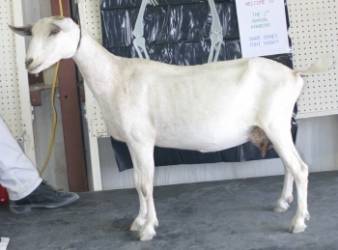
White/Cream - Often appear white but can become more of a light cream as they mature. Sometimes referred to as 'Blonde' in Nubians/MiniNubians.
|
||||||||||||||||||||||
|
Tan/light brown
|
||||||||||||||||||||||
Gold
|
||||||||||||||||||||||
Red
|
||||||||||||||||||||||
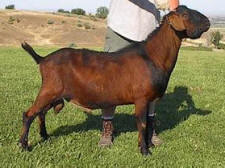
Reddish-Brown -
Browner than red but not a chocolate brown.
|
||||||||||||||||||||||
| This section covers the colors produced by eumelanin: | ||||||||||||||||||||||
Black
|
||||||||||||||||||||||
Dark Brown
- This color is actually a dilution of black. Can occur in almost
all of the patterns in place of black.
Different from reddish brown as it doesn't have that red/orange/yellow
hue. Some brown kids start out looking black and lighten to
chocolate as they mature.
|
||||||||||||||||||||||
| Blue-Gray - looking for photos of goats with this color! | ||||||||||||||||||||||
|
Patterns can be made up of a combination of colors. Once you have decided the main colors of your goat, you can see which pattern the goat best fits. If they do not match a pattern, there is nothing wrong with just describing the markings you see. |
||||||||||||
|
Solid - the goat is one solid color - no patterns or markings
|
||||||||||||
|
Bezoar - Tan or reddish body with a dark head with stripes, pale belly (dark belly would be Chamoisee), black striped legs and dark dorsal. Bucks often develop a dark martingale (markings around neck and chest) as they mature.
|
||||||||||||
|
Chamoisee/badgerface/bay - tan/red body with black belly, dorsal, lower legs and face. Also known as 'Oberhasli pattern'.
|
||||||||||||
|
Buckskin - Front half is darker while rear half is lighter. There are light stripes on the dark head and pale on legs. Dark markings (chevron) on the rear legs. The light areas can range in color from a pale tan/cream to deep red. The dark half can be black to chocolate. There can also be combinations where the front is red and the back is cream.
|
||||||||||||
|
Grey and striped grey - Goat is uniformly covered with a mix of white and black hairs producing a grey affect. Striped grey has a black martingale.
|
||||||||||||
|
Agouti Grey - Goat is uniformly covered with a mix of white and black hairs producing a grey affect with a dark martingale, dorsal stripe and dark legs. This is a very common color for Pygmies. Agouti is often called blue roan by Nubian breeders, but is actually different as it has the black legs and facial markings while most roans do not.
|
||||||||||||
|
Peacock - this pattern comes in several variations listed below and is common in Alpines
|
||||||||||||
|
Swiss marked/Sundgau - Dark body including belly with light legs, facial stripes, and ears
|
||||||||||||
|
Black and Tan/Light Belly/ Striped light belly - dark body with lighter markings such as belly, eyebrows/facial stripes, Usually has dark markings on the front of the legs. Can be described as 'Black (or chocolate, gold what ever base color) with gold (or tan) trim". A buckskin can appear to be a black and tan as sometimes the lighter hindquarters darken.
|
||||||||||||
|
Tan Cheek - Dark body with lighter patches on the cheek. Can also be referred to as 'red (or tan or whatever color the marking is) highlights'.
|
||||||||||||
|
Markings can be over any color and pattern.
|
|||||||||||||||
Belt/belly band - this is a white marking
around the goat. Usually around the girth area. It may be a
full belt (goes all the way around) or a partial belt.
Can refer to the goat as 'belted'.
|
|||||||||||||||
Roaning - white hairs
scattered throughout the goat. Can be just a little bit on part of
the body to most of the body speckled. Lots of roaning on a black
goat is often called a blue roan as it makes the goat look almost blue.
|
|||||||||||||||
Frosted ears and
muzzle/nose - White speckles on ears and muzzle
|
|||||||||||||||
Spots
- random spots that can vary from one tiny spot to covering the whole
goat.
|
|||||||||||||||
Moonspots - spots that are lighter than the base coat
but are not true white. They are often round but not always Often start out dark as
a kid but get lighter with age.
Moonspots are different from spotting in that they are not a true white,
but off-white, cream, tan or even chocolate.
|
|||||||||||||||
Star - White on poll (top of head). Can be
large or small.
|
|||||||||||||||
Ticked -
small dark spots in otherwise white areas.
|
|||||||||||||||
If you have photos of MiniNubians with the colors, patterns or markings that are missing on this page, and would like to share them here, you can email them to the webmaster.
For an excellent explanation of
how color genetics work in goats check out
Nigerian Dwarf Color
Genetics which had a large part in shaping this page.